I Stopped Creating for the Algorithm — And Finally Started Making Things I Actually Love

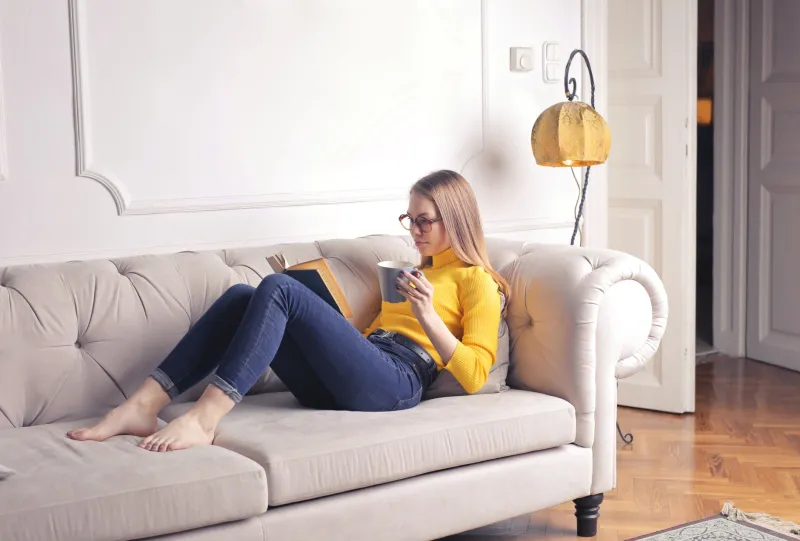
Photo by Photo by Dragonfly Ave on Unsplash on Unsplash
Let me paint you a picture of who I was about eighteen months ago.
I'd be getting dressed in the morning — a genuinely joyful act that I'd loved since I was a kid raiding my mom's closet — and somewhere between reaching for a vintage blazer and reconsidering it, a small, insidious voice would pipe up: But will it photograph well? Is this moment-worthy? Is this the kind of thing people save?
I was styling myself for an audience that wasn't in the room. And it was making me a worse dresser, a less interesting person, and honestly, a little miserable.
That was the moment I decided to spend a year creating — writing, dressing, making things — without asking the internet for permission.
What 'Creating for Engagement' Actually Does to Your Brain
Here's what nobody talks about: optimizing for likes doesn't just change what you post. It changes what you notice. It rewires the way you move through the world.
When I was deep in the engagement spiral, I'd walk into a vintage store and immediately start mentally categorizing pieces by their content potential rather than by whether I genuinely wanted them. I'd write a paragraph and then delete it because it felt too niche, too specific, too me — and therefore probably not relatable enough to perform well.
The algorithm had colonized my taste. And taste, I've come to believe, is basically the whole point.
Creative identity isn't something you build by chasing what's working for other people. It's built in the accumulation of small, honest choices — the weird reference you can't stop thinking about, the silhouette that makes no logical sense but feels completely right, the essay that only twelve people will fully understand but those twelve people will love with their whole chest.
What the Year Actually Looked Like
I want to be honest: the first few months were uncomfortable in a way I didn't anticipate.
I'd share something — a fit that felt genuinely exciting to me, a piece of writing I was proud of — and the response would be quieter than I was used to. And instead of that being freeing, it initially felt like failure. The old metrics were still running in the background of my brain, even when I was trying to ignore them.
The shift happened gradually. I started keeping a private document — just for me — where I'd write about what I was drawn to and why. No audience, no framing, no hook. Just: I keep thinking about this 1970s Italian fashion editorial. Here's what's pulling me in. Or: I bought this ridiculous, oversized chartreuse coat and I don't care that it's not having a moment right now.
That document became the most honest creative record I've ever kept. And it started feeding everything else.
The Practical Stuff (Because Inspiration Needs Infrastructure)
Going off-metric doesn't mean going off-structure. Here's what actually kept me grounded:
I made a "want" list that had nothing to do with trend cycles. Pieces I was genuinely hunting for. References I wanted to explore. Ideas that kept surfacing regardless of whether they were culturally relevant. This list became my creative north star.
I started consuming more slowly. Less scrolling, more reading. Actual books about fashion history. Long-form interviews with designers and artists. Documentaries. The kind of input that doesn't have a share button attached to it.
I gave myself permission to be in a niche. The fear of being too specific is real, and it's mostly unfounded. The people who connected most deeply with what I was making were the ones who felt like I was speaking directly to them — not the ones who found me through a trending sound.
I treated my wardrobe like a personal archive. Not a content library. Each piece became less about documentation and more about relationship — why I chose it, what it meant, where it was taking me aesthetically.
What Happened to My Audience (This Is the Part That Surprised Me)
Here's the paradox I didn't see coming: when I stopped trying to reach everyone, I started actually reaching people.
The comments got longer. The DMs got more personal. People weren't just saying "love this" — they were telling me why something resonated, what it reminded them of, how it connected to something in their own lives. The numbers were sometimes smaller, but the quality of the conversation was completely different.
I think what happened is that authenticity is, weirdly, more magnetic than optimization. When you're creating from a genuine place, something in the work transmits that. People can feel the difference between something made for them and something made for a metric — even if they can't articulate it.
The audience I have now is smaller in some ways and so much more real.
On Identity and What This All Means
I've been thinking a lot about what it means to have a creative identity — a real one, not a brand persona, not a content strategy, but an actual point of view that you'd defend in a room with no audience.
For me, it's taken shape slowly over this past year. It lives in my obsession with proportion and the way a sleeve hits a wrist. It's in my preference for writing that meanders before it lands. It's in the colors I keep returning to even when they're not having a cultural moment.
None of this was handed to me by an algorithm. I had to go looking for it in the quiet.
If you're feeling creatively flat, or like everything you make has started to look and sound like everything else — that's worth paying attention to. Not as a failure, but as a signal. The work that matters to you is probably waiting on the other side of the metrics, in the place where you make things for no reason except that you genuinely, honestly had to.