The Difference Between Accepting Yourself and Settling for Less
I want to talk about something that's been sitting with me for a while — a tension I've noticed in myself and in basically every conversation I have with women I respect.
We've gotten really good at self-acceptance. And that's genuinely wonderful. The body positivity movement, the therapy-speak that's finally gone mainstream, the collective pushback against perfectionism — these are real cultural shifts that have helped a lot of people, including me. Learning to stop picking yourself apart is hard-won and worth celebrating.
But here's where I get stuck: somewhere in that evolution, I think we quietly started using self-acceptance as a cover for something else. For not asking for more. For calling mediocrity peace. For dressing up stagnation as contentment.
And those are not the same thing.
'Good Enough' Has a Branding Problem
Let me be specific, because I think this gets muddled fast.
Accepting that your body isn't going to look like a filtered Instagram photo? Healthy. Necessary. Freeing.
Accepting that you've been wearing clothes that make you feel invisible because shopping feels hard and nothing ever fits right anyway, so why bother? That's not self-acceptance. That's surrender.
Staying in a friendship that's run its course because ending it feels confrontational and you don't want to be the difficult one? That's not being easygoing. That's quietly abandoning your own standards to avoid discomfort.
I've done both of these things. And I've spent a lot of time calling the second category "growth" when it was actually just avoidance with better PR.
Where I Started Raising the Bar
For me, the wake-up call came through fashion — which might sound shallow, but stay with me.
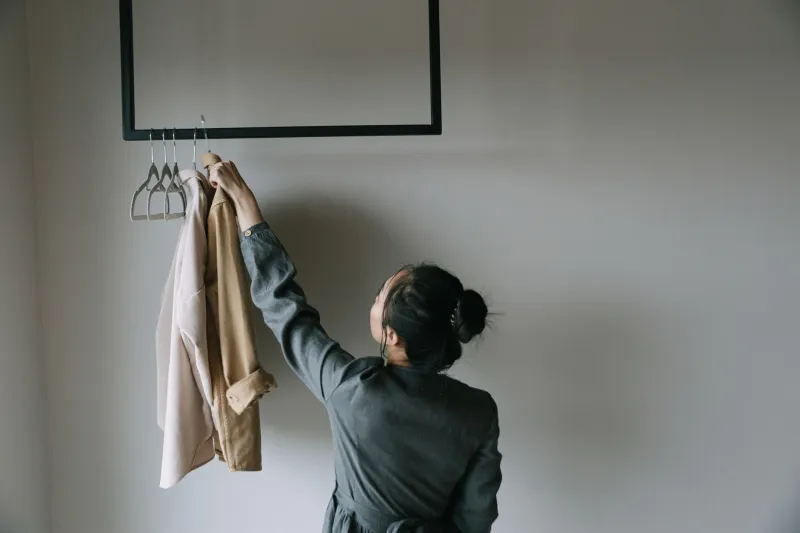
I had a closet full of clothes that were fine. Not exciting, not particularly me, just... fine. I'd bought them quickly, without much thought, usually because they were on sale or because I needed something for an event. And every morning I'd stand in front of that closet and feel a low-grade dissatisfaction that I'd learned to ignore.
When I finally started being honest with myself about what I actually wanted to wear — not what was practical, not what was on trend, not what I could justify spending money on — everything shifted. I started letting go of the pieces that were just filling space. I started being more deliberate about what I brought in. My closet got smaller and started feeling like mine.
That process taught me something I've been applying to the rest of my life ever since: there's a real difference between accepting imperfection and accepting things that actively don't serve you.
The Toxic Positivity Trap
Here's what I think happened. Somewhere between "you don't have to be perfect" and "everything is fine the way it is," we lost the thread.
Toxic positivity — that reflexive insistence that everything is okay and we should be grateful and who are we to want more — is its own kind of harm. It shuts down legitimate dissatisfaction before it can become useful information. Because dissatisfaction, when you actually listen to it, tells you something true about what you value and where you're not living in alignment with that.
The goal isn't to be perpetually content. The goal is to be honest — about what's working, what isn't, and where you're letting yourself off the hook because the alternative requires effort or courage.
Where Compromise Actually Serves You
I'm not here to tell you to blow up your life in pursuit of some impossible ideal. That's not intentional living — that's just trading one form of chaos for another.
There are places where compromise is genuinely wise. Relationships, for instance, require it constantly. No partnership — romantic, professional, or otherwise — survives without flexibility and grace. Learning to release the need for everything to go exactly your way is real growth.
Same goes for your home, your career, your creative work. Sometimes good enough is good enough, because you've made a thoughtful trade-off rather than a fearful concession. The difference is intention.
The question I've learned to ask myself is: Am I making this choice, or am I avoiding a harder one?
When I can answer that honestly, the path forward usually becomes clear.
Building the Standard, Not the Ideal
Perfectionism and high standards are not the same thing. Perfectionism is rooted in fear — fear of judgment, fear of failure, fear of being seen as not enough. High standards come from self-knowledge. They're about understanding what actually matters to you and refusing to chronically undercut it.
For me, that's looked like being more selective about the work I take on. Letting go of friendships that had become one-sided. Investing in the pieces of my wardrobe I'll actually reach for instead of buying volume for the sake of options. Saying out loud what I want in a relationship instead of hoping someone figures it out.
None of that is perfectionism. It's just knowing myself well enough to act on it.
The Life You're Actually Designing
This site has always been about curation — about being intentional with the life you're building rather than just accumulating experiences and things and relationships by default. That's the whole spirit of what I'm doing here.
And curation, by definition, means making choices. It means saying this, not that. It means holding a standard — not a rigid, punishing one, but a real one — for what gets to take up space in your life.
So yeah. Accept yourself. Fully, completely, without reservation.
And then — from that solid, self-accepting place — ask for more. From your wardrobe, your work, your relationships, your days. Not because you're not enough, but because you know exactly what you're worth.
Those two things aren't in conflict. In fact, I think the second one only becomes possible once you've genuinely done the first.