Pay Attention to Where You Actually Exhale — It's Telling You Something About Your Whole Life

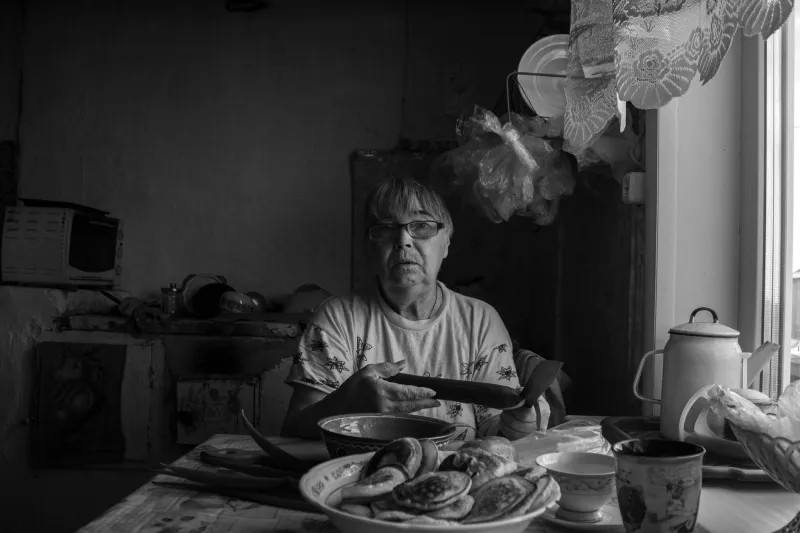
Photo: Shixart1985, CC BY 2.0, via Wikimedia Commons
I noticed it first in my car, of all places.
Not driving anywhere particular — just sitting at a long red light on a Wednesday afternoon, music low, nothing demanding my attention for exactly sixty seconds. And something in my chest loosened. Not dramatically. Just a quiet release, like a door easing off its hinge. I felt, for a moment, completely like myself.
It was such a small thing. But it stayed with me. Because I realized I couldn't remember the last time I'd felt that way inside my own apartment.
That's when I started paying attention differently. Not to the big questions — am I happy, am I living my best life, am I on the right path — but to the small, physical, almost involuntary moments where I felt at ease. Where the performance stopped and something more honest took over.
The Exhale Inventory
Most of us have a version of this if we look for it. There's a specific chair at a friend's house where you always end up. A coffee shop you return to again and again even though there are closer options. A particular stretch of road on your commute where you feel something loosen. A section of a bookstore. Your parents' kitchen. A certain hour of the morning before anyone else is awake.
These places aren't random preferences. They're telling you something about your nervous system, your personality, your actual needs — the ones that exist underneath the needs you've decided you're supposed to have.
The exercise I started doing was simple: for two weeks, I kept a loose mental (sometimes physical) note of the moments where I felt most like myself. Not happy, necessarily. Not productive or social or inspired. Just like me. Recognizably, comfortably, undeniably me.
The pattern that emerged was genuinely surprising.
What My Comfort Spots Had in Common
I'm someone who thought I was a social person. I grew up in a big family, I've always had a lot of friends, I'm good at parties. I assumed I was energized by people and activity.
But my exhale moments? Almost none of them involved crowds. They were: my car at red lights, a specific corner booth at a diner near my apartment, the hour after guests leave when I'm cleaning up alone, my desk early in the morning before I checked my phone, long walks where I didn't listen to anything.
I'm not antisocial. But I'm also clearly someone who restores in quiet, in small contained spaces, in moments of low-demand solitude. My actual wiring had been trying to tell me this for years and I kept overriding it with a story about who I thought I was.
What This Has to Do With How You Live
Here's where it gets practical in a way I didn't expect.
Once I knew what my comfort spots had in common — small scale, low noise, a sense of containment, natural light, no performance required — I started looking at my apartment through that lens. And I realized almost nothing in it matched.
I had an open-plan living space because open-plan felt modern and spacious and aspirational. I had no real reading nook, no contained little corner, nothing that felt like a room within a room. My desk was positioned to face the door, which sounds feng shui-approved but actually meant I was always aware of the whole apartment behind me, never fully settled.
I wasn't decorating for the person I actually am. I was decorating for a version of myself I'd decided was more appealing — more social, more open, more ready for the spontaneous dinner party.
The Bigger Life Questions These Moments Answer
This practice goes beyond furniture arrangement. It starts answering questions you might have been circling for years without knowing how to approach them.
Like: do you actually want to live in a city? Not do you like cities in theory, or do you enjoy visiting them, or does city living sound impressive — but do the moments where you feel most yourself happen in density and noise and stimulation? Or do they happen somewhere quieter?
Or: do you actually want the open-calendar, always-available social life you've been maintaining? Or do you feel most like yourself in the pockets between plans, in the unhurried mornings, in the weeks where not much is scheduled?
Or: is the pace of your current life actually yours? Or did you inherit it from a partner, a friend group, a city, a job culture, a decade of your twenties that made a certain rhythm feel like the only rhythm?
Your exhale moments know. They've always known.
How to Use This Information Without Blowing Up Your Life
I want to be clear: noticing where you feel most yourself doesn't mean you immediately need to quit your job, move to Vermont, and become a person who makes their own bread. (Although honestly, no judgment if that's where this takes you.)
It means starting to close the gap — slowly, practically — between the life you've built and the life that actually fits.
For me, that looked like: rearranging my desk to face the window instead of the door. Creating one small, enclosed corner in my apartment with a chair and a lamp that exists for nothing except sitting in. Protecting one morning a week that's genuinely quiet with no plans. Saying no to some social things I was attending out of obligation and using that time to do the low-key, solitary things that actually restore me.
None of those are dramatic. But they added up. My apartment started feeling more like mine. My weeks started having a rhythm that matched how I'm actually wired. The exhale moments started happening at home, not just in parking lots and corner booths.
Pay attention to where you exhale. It's not a small thing. It's a map.