Stop Trusting Your Eyes: What Your Hands Already Know About the Life You Want
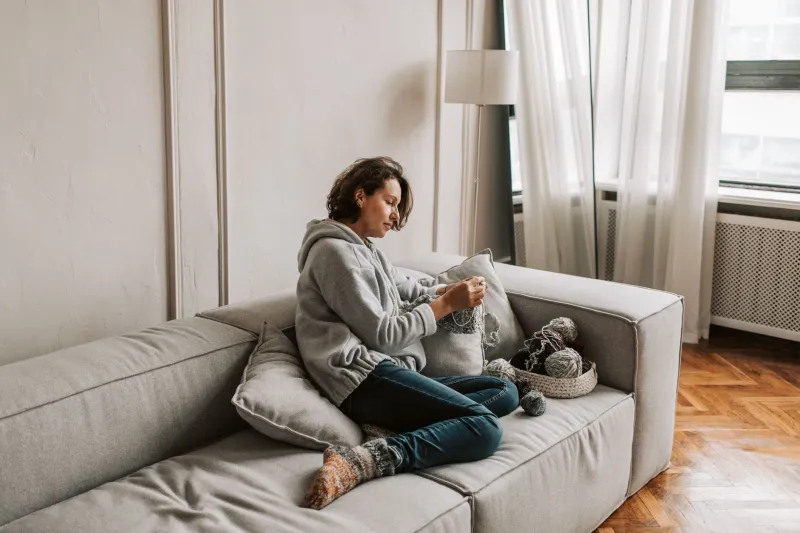
There's a moment I keep coming back to. I was standing in a home goods store somewhere in Brooklyn, holding a linen throw blanket that photographed like a dream — oatmeal-colored, artfully nubby, the kind of thing that makes a couch look like it belongs in an Architectural Digest spread. I almost bought it. Then I actually touched it.
Rough in the wrong way. Scratchy at the edges. The kind of texture that sounds cozy in theory but would make you itch through a whole movie.
I put it down. And something clicked.
We've Been Outsourcing Our Instincts to Our Screens
Most of us build our lives visually now. We screenshot things we love, we save Instagram posts, we curate Pinterest boards full of aesthetics we're chasing. And there's nothing inherently wrong with that — I do it too. But somewhere along the way, the looking started replacing the feeling, and we ended up with homes full of things that seem right but don't actually feel good to live inside.
I started calling this the texture gap — the distance between how something appears and how it actually feels to exist alongside it. And once I noticed it in my apartment, I started seeing it everywhere. In my wardrobe. In my routines. In the relationships I was maintaining mostly because they looked fine from the outside.
Texture, I've come to believe, is one of the most honest signals we have. It's harder to fake than a good photo. It doesn't perform for anyone.
The Closet Experiment That Changed How I Shop
A few months ago I did something kind of obsessive and also kind of revelatory: I went through my entire closet and touched everything without looking at it first. I pulled items out with my eyes closed (or at least averted) and just held them, ran my fingers along the fabric, registered what my body actually said before my brain could interfere with opinions about the color or the brand or whether it was technically in style.
The results were embarrassing and clarifying in equal measure.
There was a silk blouse I'd been holding onto for three years because it was expensive and beautiful and photographed incredibly. My hands did not like it. The fabric had that slightly cold, slightly slippery quality that never quite warms up to your skin. I'd worn it maybe four times, always while feeling vaguely uncomfortable and never knowing why.
And then there was this soft, slightly worn French terry sweatshirt I'd almost donated twice because it wasn't cute enough. My hands loved it immediately. It felt like being held. I wear it constantly.
I kept the sweatshirt. I finally let the blouse go.
Texture as a Metaphor for Authenticity
Here's where I want to push this further, because I don't think this is just about fabric.
When I talk about texture, I mean it literally — the physical quality of the things around us — but I also mean it as a way of talking about depth, about substance, about the difference between a life that looks curated and a life that actually feels curated from the inside.
A lot of us are living smooth lives. Smooth in the sense that everything looks polished and intentional but there's nothing to actually grip. The friendships that are easy and pleasant but somehow never go anywhere real. The job that sounds impressive at dinner parties but leaves you weirdly hollow on Sunday nights. The self-care routines that make great content but don't actually restore anything.
Smooth isn't always bad. But it's worth asking: does your life have texture? Does it have the kind of depth and variation and occasional roughness that comes from things that are genuinely yours?
Learning to Do the Touch Test in Real Life
I've started applying this principle pretty broadly, and it's changed the way I make decisions in ways I didn't expect.
Before I commit to something — a new habit, a social obligation, even a creative project — I try to sit with how it feels in my body rather than how it looks on paper. Not the elevator pitch version of it, but the actual lived texture of doing it. What does Tuesday morning feel like when this thing is in my life? What does my chest do when I think about showing up for it?
Sometimes the texture test reveals that something I thought I wanted is actually just something I thought I should want. Those two things look identical from the outside. They feel completely different.
And sometimes it reveals the opposite — that something unglamorous and hard to explain is actually deeply right for me. The weird hobby nobody gets. The friendship that doesn't make sense on the surface but feels like home. The creative direction that's messier and less marketable but makes me feel alive.
Practical Ways to Start Paying Attention
If you want to actually try this — and I think you should — here are a few entry points that have worked for me:
Touch your things before you buy them. Sounds obvious, but in an era of online shopping and one-click purchasing, we've gotten out of the habit. If you can, feel it first. Your body will tell you things the product photos won't.
Notice what you reach for without thinking. The mug you always grab first. The sweater you put on when no one's watching. The notebook you actually write in versus the beautiful one you keep saving for something special. Those instinctive choices are data.
Do a texture audit of one room. Walk through your living space and touch the surfaces, the textiles, the objects. Which ones make your shoulders drop? Which ones make you feel vaguely tense without knowing why? You might be surprised what you find.
Apply the concept metaphorically. Ask yourself: which parts of my life feel rich and real when I'm actually living them, not just when I'm describing them? That gap between the story and the sensation — that's worth investigating.
What I'm Building Now
I'm not saying aesthetics don't matter. They do, and I love them. But I've started treating visual beauty as a bonus rather than the whole point. The question I ask first now is: how does this actually feel to be around? Does it nourish something real, or does it just photograph well?
The life I'm building is one my hands would recognize as good, not just my eyes. It has texture. It has weight. It has the kind of worn-in quality that comes from things being genuinely used and genuinely loved.
That linen throw blanket would have looked perfect on my couch. But I would have stopped touching it within a week, and eventually I would have stopped noticing it at all — just another beautiful object I'd stopped being present with.
I want a life I keep reaching for. That's the whole project, really.