Not Knowing Is an Answer Too: The Hidden Power of Keeping a Decision Open
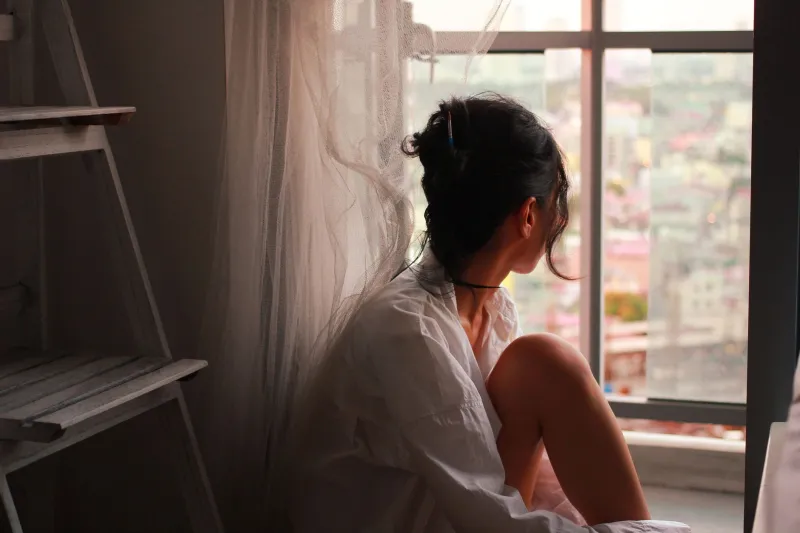
There's a particular kind of social discomfort that comes when someone asks you a direct question — So what are you doing next? or Have you figured out what you want? — and the most honest answer you can offer is a quiet, slightly embarrassed shrug. We're trained from pretty early on to treat that shrug as failure. As if uncertainty is just a waiting room you should be sprinting out of.
I've spent a lot of time sprinting. Filling in the blanks before I actually knew what belonged there. Committing to things — jobs, aesthetics, relationships, routines — because the alternative (admitting I genuinely didn't know yet) felt like weakness. Felt like I was behind. Felt like everyone else had already figured it out and I was the only one still staring at a blank page.
Spoiler: they hadn't. And I wasn't.
The Pressure to Have It Together (And Where It Actually Comes From)
American culture is particularly allergic to uncertainty. We love a pivot story, sure — but only in retrospect, once you've landed somewhere definitive and can package the confusion into a neat narrative arc. In real time? Uncertainty reads as indecision. Indecision reads as a lack of ambition or self-awareness. And so we paper over the gaps with quick answers that feel confident but aren't actually true.
Social media accelerates this. Everyone's aesthetic is cohesive, their direction is clear, their identity is branded. There's no room in a curated grid for I'm still figuring out what I actually like. So we perform certainty we don't feel, and then we wonder why the decisions we make from that place so often feel hollow.
Here's what I've started to believe: the rush to resolve uncertainty isn't about clarity. It's about comfort — other people's comfort, mostly. The discomfort of watching someone sit with an open question is something we project back onto them as a problem they need to fix.
What It Actually Looks Like to Sit With Not Knowing
I want to be specific here, because "sit with uncertainty" can sound like passive advice — like just doing nothing and calling it wisdom. That's not what I'm talking about.
Sitting with a decision means continuing to live while the question stays open. It means gathering information without forcing a conclusion. It means noticing what you're drawn to, what you're avoiding, what keeps coming back up — without immediately translating those signals into a definitive move.
A few years ago, I was genuinely unsure about a major shift in how I wanted to spend my time and energy creatively. Every person in my life had an opinion. Some of those opinions were genuinely helpful. But the pressure to decide right now, to pick a lane and commit publicly, was enormous. And every time I tried to force a conclusion just to relieve that pressure, the answer felt wrong in a way I couldn't articulate.
So I stopped trying to decide. Not permanently — but intentionally. I gave myself a window of time where the only job was to pay attention. To notice what lit me up. To stop performing certainty I didn't have.
The decision that eventually emerged from that period didn't feel like a decision at all. It felt like something that had already been true for a while — I just finally stopped arguing with it.
Your Style Knows This Too
This applies to fashion and personal style in ways I find endlessly interesting. There's so much pressure — from trends, from social media, from the very existence of aesthetic labels — to know exactly who you are stylistically. Cottagecore or clean girl. Minimalist or maximalist. Put yourself in a box so the algorithm can find you.
But some of the most interesting personal styles I've ever encountered belong to people who resisted that categorization long enough to find something genuinely their own. They didn't rush to adopt a look because it was trending. They kept wearing what felt right, kept noticing what they kept reaching for, kept editing out what didn't belong — and eventually something emerged that was theirs in a way that a trend-adopted identity never quite is.
The closets that feel most alive aren't the ones built from a decision made in a single weekend overhaul. They're built from ongoing attention. From sitting with questions like does this actually feel like me? long enough to trust the answer.
The Difference Between Avoidance and Patience
I want to name the thing I know some of you are thinking: isn't this just a sophisticated way of avoiding hard choices?
Sometimes, yes. And it's worth being honest with yourself about which one you're doing.
Avoidance looks like refusing to think about something because it's uncomfortable. It looks like distraction, deflection, filling the space with noise so you don't have to hear what's underneath. It's not really sitting with the question — it's running from it while pretending to stand still.
Patience looks different. It's engaged. It's curious. You're not avoiding the question — you're taking it seriously enough to not answer it badly. You're respecting the decision enough to let it form properly instead of forcing it into a shape that's convenient right now but wrong for later.
The distinguishing question I ask myself: Am I thinking about this, or am I thinking around it? One is patience. The other is avoidance wearing patience's clothes.
Letting 'Not Yet' Be Enough
I've started treating I don't know yet as a complete sentence. Not a placeholder. Not an apology. A full, considered response to a question that deserves more than a quick answer.
There's something almost radical about saying it out loud without adding a bunch of qualifiers. Without the but I'm working on it or the I should probably figure that out. Just: I don't know yet. And I'm okay with that.
Because here's the thing about unfinished decisions — they're not actually unfinished. Holding a question open is a choice. It's the choice to take yourself seriously enough to wait for a real answer instead of a convenient one. It's the choice to trust that clarity will come when it's ready, and that forcing it early rarely produces the outcome you actually want.
Some of the best things in my life — the most authentic parts of how I dress, how I spend my time, what I create, who I let in — came from questions I refused to rush. From spaces I kept open long enough for something true to move into them.
The blank page isn't failure. Sometimes it's just the beginning, doing its job.