Your Home Has Been Whispering the Truth About You All Along
There's this moment — and maybe you've had it too — where you walk into a room you've been in a thousand times, and something stops you. Not because anything changed overnight. Not because you rearranged the furniture or bought a new lamp. It's more like a quiet recognition, the way you might suddenly notice a song has been playing in the background the whole time you were busy thinking about something else.
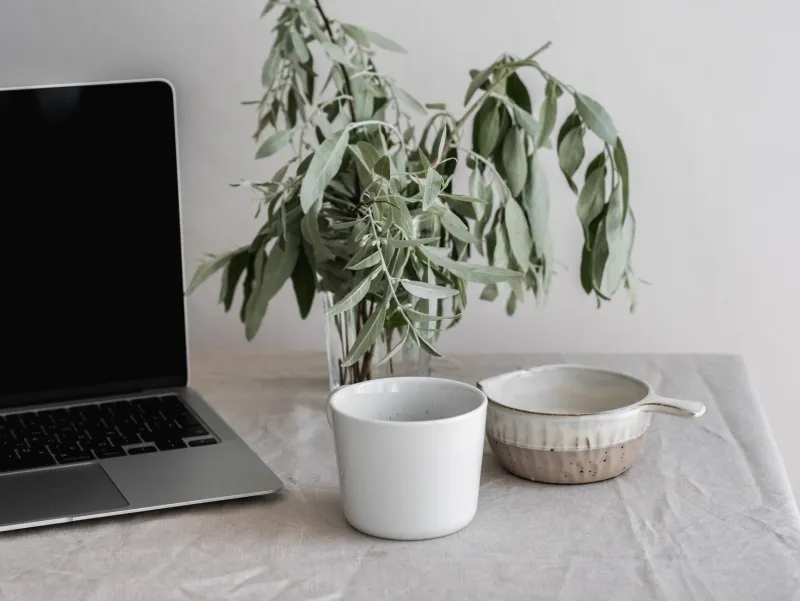
I had that moment standing in my kitchen on a Tuesday morning, coffee in hand, looking at the little corner shelf I'd been ignoring for two years. There were dried botanicals, a ceramic bowl I'd picked up at a farmers market in Portland, a stack of cookbooks I actually use. And I thought: this is so me. Not the me I was performing for Instagram, not the me I thought I was supposed to be — but actually, genuinely me.
The weird part? I didn't consciously build it that way. It just became that over time.
Spaces Don't Lie the Way We Do
We edit ourselves constantly. We curate what we say, what we post, what we wear to certain events. We're so practiced at presenting a version of ourselves that it can get genuinely confusing — even to us — what's real and what's performance.
But our spaces? They accumulate truth. Slowly, over months and years, the things we reach for, the corners we return to, the objects we keep even when we declutter everything else — they build a portrait that's remarkably honest.
Psychologists have long studied what's sometimes called behavioral residue, the idea that our personalities leave physical traces in the environments we inhabit. Your most-used spaces aren't just backdrops. They're records. And if you're willing to read them, they can tell you things about yourself that you might still be in the process of figuring out.
I think about this a lot when friends tell me they feel lost or disconnected from themselves. One of the first things I ask now is: what does your space look like? Not in a judgmental way — in a genuinely curious one. Because nine times out of ten, the answer reveals something they haven't said out loud yet.
The Objects That Stayed
Here's an exercise I started doing a couple of years ago, and it sounds almost too simple: I walk through my apartment and I notice what's lasted. Not what I bought intentionally or what I keep meaning to get rid of — but what has quietly survived every edit, every move, every seasonal refresh.
Those things are data.
For me, it was books about craft and making. A collection of mismatched mugs that all have a story. Art prints from small creators I found online at 2am when I was feeling inspired. A running list of recipes pinned to my fridge that I actually cook from.
None of that was planned as a statement. But together, it told me something true: I am someone who values the handmade, the personal, the warm, and the creative. And that understanding — arriving at it through my surroundings rather than through some forced journaling prompt — felt different. It felt earned.
When Your Space Gets Ahead of You
This is the part that fascinates me most: sometimes our environments evolve before our conscious self catches up.
A few years back, I started gravitating toward quieter tones in my home. Softer textures, fewer statement pieces, more breathing room. At the time, I thought I was just going through a design phase. Looking back, I was moving toward a slower, more intentional way of living — I just hadn't named it yet. My space knew before I did.
I've heard similar things from people I know. A friend who started clearing out her home office months before she decided to leave her corporate job. Another who, without quite realizing it, had built an incredibly social, gathering-ready living room in the year before she came out — a space that was quietly preparing for the life she was moving toward.
Our spaces hold our intentions before we're ready to hold them ourselves.
How to Actually Listen
So how do you tune in? It's less about analysis and more about presence — which, I know, sounds like something on a wellness calendar, but bear with me.
Start by slowing down in your most-used spaces. Not to fix anything or make it prettier for a photo. Just to notice. What makes you exhale? What makes you tense? Where do you naturally end up at the end of a long day, and what does that spot look like?
Ask yourself: if a stranger walked in here, what would they assume about the person who lives here? Then ask the more interesting question — are they right?
Look at the things you've held onto through multiple moves or life transitions. Objects tend to outlast the reasons we originally kept them, which means the ones that stay are the ones that still fit who we are, even as that shifts.
And pay attention to what feels wrong. Spaces that feel performative — decorated for a version of yourself you've outgrown, or for an imagined audience that doesn't actually visit — have a particular kind of low-grade discomfort. That discomfort is information.
Recognition Is Its Own Kind of Coming Home
The morning I stood in my kitchen and finally recognized myself in that corner shelf, I felt something I can only describe as relief. Like I'd been looking for something and realized I'd been standing next to it the whole time.
That recognition matters. Not because your home needs to be curated or perfect or aesthetically consistent — it doesn't. But because the moment you see yourself clearly reflected in the space you actually inhabit, you understand something about who you are that no personality quiz or therapy prompt quite captures.
You understand that you've been building yourself, quietly, all along.
And that person? She's worth paying attention to.