How the Things Around Me Started Shaping the Person I Was Becoming
There was a period in my life when I owned a coffee mug I genuinely hated. It was oversized, the handle was awkward, and the color was this muddy beige that made me feel vaguely tired every time I looked at it. I kept it because it was functional. It held coffee. It did the job.
But here's the thing I didn't understand until much later: every single morning, the first object I touched was something that made me feel a little bit worse. And I was doing that completely on purpose, in the name of practicality.
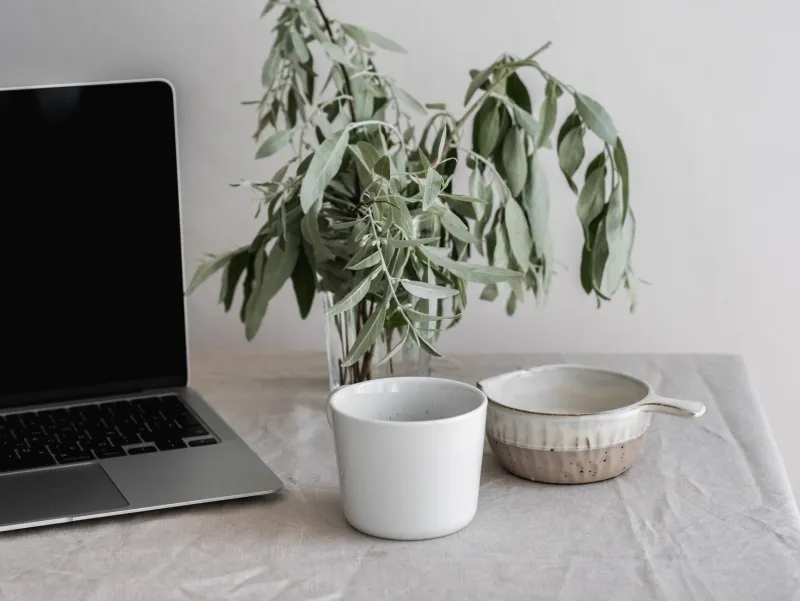
I eventually threw it out. I replaced it with a small ceramic cup I bought at a local market — the kind that feels intentional in your hand, with a glaze that shifts between sage and cream depending on the light. And I know how that sounds. I know. But the mornings got better. Not because of magic. Because I had stopped beginning my day with a small, unnecessary compromise.
That mug became the first thread I pulled. And it unraveled a lot.
Your Environment Is Always Talking to You
We tend to think of our surroundings as passive — background noise while the real stuff of life happens. But designers, psychologists, and honestly just people who've paid attention know that's not how it works. The colors, textures, and objects in your immediate space are constantly sending your brain low-grade signals. They prime you. They set a tone before you've even made a conscious decision.
This isn't some wellness-influencer concept I picked up from a mood board. There's actual research behind it. Color psychology, environmental design, even the way clutter affects cognitive load — it's studied, documented, and consistently points to the same conclusion: your surroundings shape your behavior more than you think they do.
For me, the shift happened when I stopped treating my environment as something to manage and started treating it as something to design with intention. Not for anyone else. For the version of me I was trying to become.
The Clothes Were Part of It Too
I want to be careful here, because this isn't about spending money or chasing aesthetics for the sake of a curated image. What I'm talking about is something more internal than that.
When I started paying attention to what I was wearing — not trends, not what looked right on someone else, but what actually felt like me — something shifted in how I carried myself. I stood differently. I made decisions with a little more steadiness. I wasn't performing confidence; I was just less distracted by the low-level discomfort of feeling slightly out of alignment with myself.
There's a concept sometimes called "enclothed cognition" — the idea that the symbolic meaning of clothing actually affects how you think and perform. Wearing something that feels intentional, that you chose on purpose, can change how you move through a room. And I don't think that's vanity. I think that's just paying attention to how human beings actually work.
I started asking myself a different question when I got dressed: not does this look good but does this feel like the person I'm trying to show up as today? Those aren't always the same question. Sometimes they are. But the distinction matters.
The Desk, the Shelf, the Corner of the Room
Once I started noticing it with clothing, I couldn't stop noticing it everywhere.
The stack of books I kept on my desk that I'd read two years ago and never moved — they were making me feel behind, like I hadn't caught up with myself yet. The throw blanket on my couch that was technically fine but had a texture I didn't like — I avoided sitting there, without ever consciously knowing why. The artwork I'd hung because I felt like I should have something on that wall — it was just visual static, contributing nothing.
I started editing. Not dramatically, not all at once, but slowly and with more intention than I'd ever applied to my physical space before. I asked myself: does this thing make me feel more like myself, or less? Does it have a place in the life I'm building, or is it a leftover from a version of me I've already moved past?
Some things stayed. A lot of things went. And what was left felt like a room that was actually on my side.
This Isn't About Perfection
I want to be really clear that none of this is about achieving some aspirational, magazine-ready version of a life. That's not what I'm after, and honestly, it's not what actually makes you feel better.
What I'm talking about is the difference between a space — or a wardrobe, or a morning routine — that feels like it was assembled on accident, versus one that feels like it was built by someone who gave a damn about their own experience. The second one doesn't have to be expensive or minimalist or aesthetically coherent in any particular direction. It just has to be chosen.
That's the part that changes things. The choosing.
When you make intentional decisions about what's around you, you're practicing a kind of self-respect that's hard to articulate but easy to feel. You're saying: my daily experience matters enough to think about. The way I feel in my own home, in my own clothes, at my own desk — that's worth some consideration.
What I Know Now
I still think about that mug sometimes. Not with guilt — more with a kind of affection for how small the beginning of a shift can be. It was just a mug. But it was also the first time I acknowledged that small, daily discomforts were adding up to something, and that I had more control over them than I'd been exercising.
The aesthetic choices I've made since then aren't about looking a certain way to the outside world. They're about building an environment that helps me think more clearly, feel more settled, and show up with a little more of myself intact.
That ripples outward. Into how I work, how I talk to people, how I make decisions under pressure. When the things around me feel right — not perfect, just right for me — I operate better. I'm more generous, more focused, more willing to take creative risks.
None of that came from ignoring aesthetics in the name of practicality. It came from finally taking them seriously.