Empty on Purpose: Why I Stopped Filling Every Corner of My Home and My Life
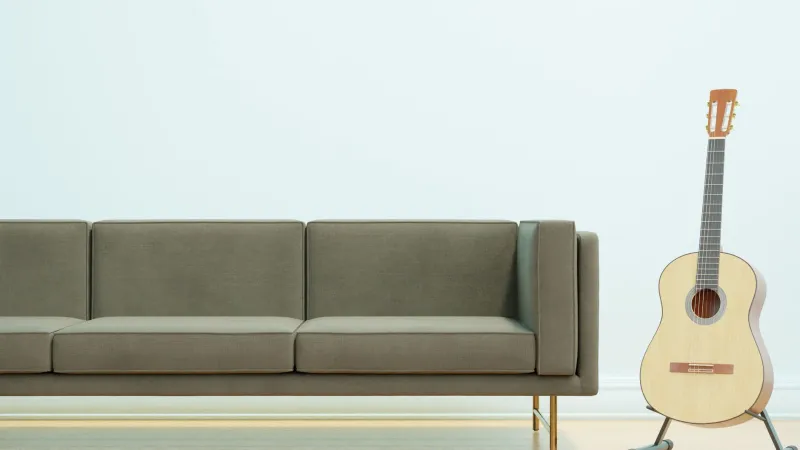
There's a particular anxiety that hits when you walk into a room with a bare wall. Or when you check your Sunday calendar and find it completely open. It's almost physical — this low-level hum that says do something, add something, fill it. I know that feeling intimately, because for years, I answered it every single time.
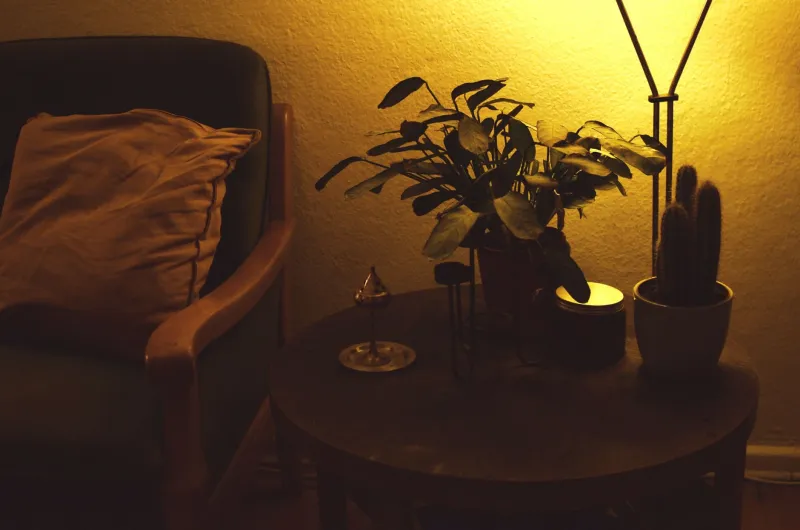
I bought throw pillows I didn't need. I scheduled brunches I didn't want. I added another plant, another candle, another obligation. And my home — my life — looked full. Looked productive. Looked curated.
But it felt exhausting in a way I couldn't quite name.
The Cultural Pressure to Maximize Everything
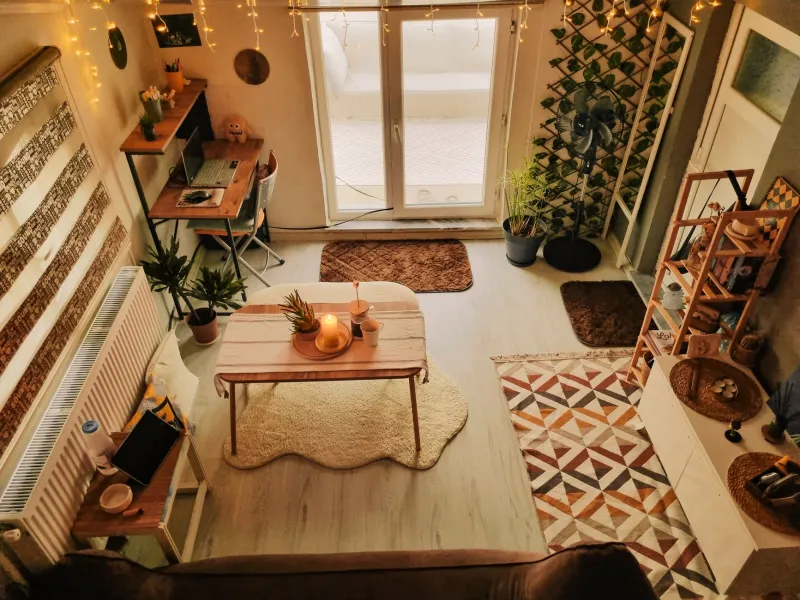
We live in a country that has turned busyness into a personality trait and maximalism into a default aesthetic. Scroll through any home design feed and you'll see it: every shelf styled to the edge, every corner accounted for, every surface doing work. The same logic bleeds into our schedules. Productivity culture tells us that an empty hour is an opportunity we're squandering.
The message is everywhere and it's relentless: more is more, and anything less is laziness dressed up as a lifestyle choice.
But here's what I've come to believe — that pressure isn't actually about design or productivity. It's about discomfort with stillness. We fill space because empty space asks us to sit with ourselves, and that can feel genuinely terrifying if we're not used to it.
The First Bare Wall That Changed Everything
It started almost by accident. I moved apartments two years ago and, in the chaos of unpacking, one wall in my living room just... stayed empty. I kept meaning to hang something. I had a list of prints I was considering. But weeks passed, and then a month, and I started noticing something strange: that wall was my favorite thing in the room.
I'd catch myself just looking at it. Thinking. Sometimes not thinking at all — just existing in the same space as all that nothing.
The emptiness wasn't a gap waiting to be solved. It was doing something. It was giving my eyes — and honestly, my brain — somewhere to rest.
I started researching the concept of negative space in design, which architects and artists have understood forever but that somehow gets lost in the Instagram version of home decor. Negative space isn't the absence of design. It is the design. It's the breath between the notes that makes music make sense.
What Negative Space Actually Does to a Room
When I started being intentional about emptiness in my home, the shift was immediate and kind of embarrassing in its simplicity. Removing things — a side table I never used, a gallery wall that was more obligation than joy — made the pieces I kept feel more considered. More mine.
A single ceramic vase on a wide shelf reads completely differently than that same vase surrounded by six other objects. One says I chose this. The other says I collected things until the shelf was full.
Negative space in a room also does something practical: it lowers the visual noise. And lower visual noise, it turns out, translates pretty directly to a calmer nervous system. This isn't woo — there's real research connecting cluttered environments to elevated cortisol levels. Your home's chaos lives in your body whether you notice it consciously or not.
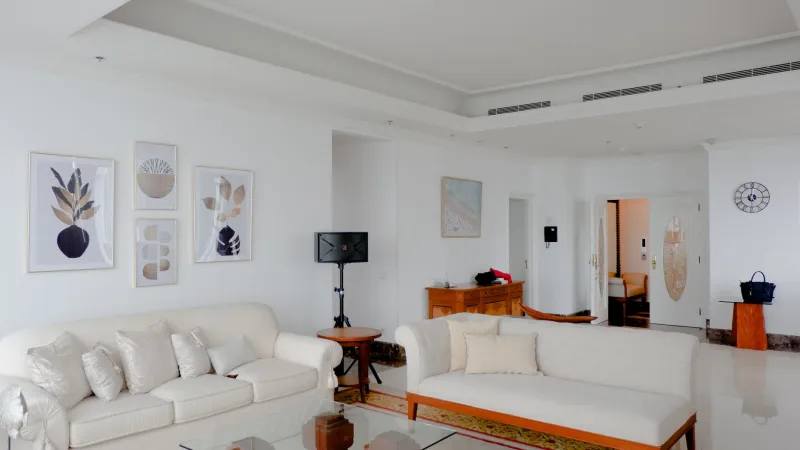
I repainted my bedroom a soft warm white and took out half the furniture. People who visit ask if I just moved in. I tell them I just finally moved in — as in, actually arrived.
Taking the Same Logic Into Time
Once I understood what intentional emptiness was doing for my physical space, I got curious about what it might do for my schedule.
I started with one protected Sunday morning per month — completely unscheduled, no plans, phone in another room. The first few times felt almost uncomfortable. My brain kept generating tasks, social texts to answer, things I could be doing. That restlessness was information. It told me exactly how addicted I'd become to filling time.
But I stayed with it. Made coffee slowly. Sat by the window. Let my thoughts move without directing them anywhere.
And here's the thing nobody tells you about temporal negative space: it's where your actual thoughts live. The ones that can't compete with noise. The creative connections, the quiet realizations, the sense of what you actually want your life to look like — none of that can surface when every moment is accounted for.
That one protected morning became a weekly practice. Then I started building small intentional gaps into regular days. A lunch break that isn't for errands. A commute without a podcast. Five minutes between tasks where I just let my brain decompress.
The quality of my thinking changed. The quality of my choices changed. I stopped agreeing to things out of momentum and started agreeing to things out of genuine desire.
Emptiness as a Luxury Mindset Shift
Here's the reframe that made all of this click for me: in a world that commodifies every surface and every second, choosing emptiness is actually the more radical, more intentional act.
Anyone can fill space. It takes no discernment, no self-knowledge, no clarity about what you actually value. Filling is easy. Curating emptiness — deciding what's worth keeping and what the silence is worth protecting — that takes knowing yourself.
The most beautifully designed spaces I've ever walked into, the ones that made me exhale the moment I entered, all had this in common: they weren't trying to impress me with how much was there. They were confident in what wasn't.
I want to live like that. Not just in my home, but in my schedule, my relationships, my creative work. Confident enough in what I've chosen that I don't need to fill every gap to prove the choices were worth making.
Starting Small (Because You Don't Have to Gut Your House)
If any of this resonates, I want to offer a genuinely low-stakes entry point: pick one surface in your home and remove everything from it. Don't replace anything for two weeks. Just notice how it feels to look at it. Notice if the room breathes differently. Notice if you breathe differently.
Then, if you're ready to try it temporally: block one hour this week that belongs to nothing. No productivity, no plans, no content. Just you and whatever your brain decides to do when it's not being directed.
You might be surprised what shows up in that space.
I was. What showed up was a quieter, clearer, more genuinely me version of the life I'd been trying to design all along — just with a lot less stuff in the way.