Your Rooms Are Telling a Story — Is It the One You Actually Want to Live?
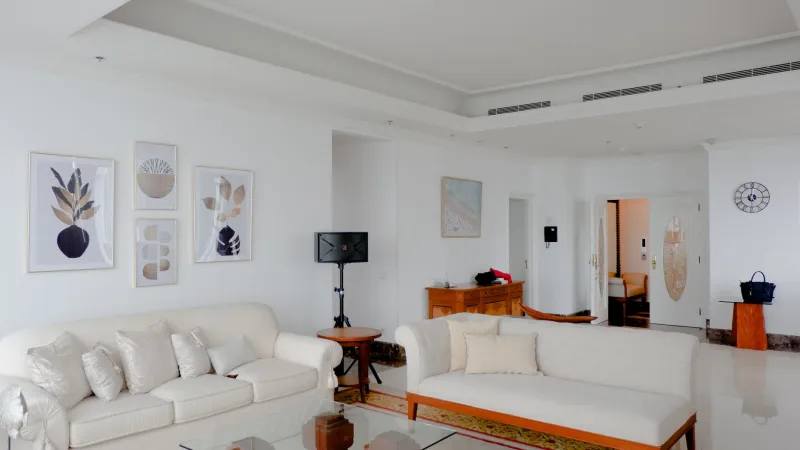
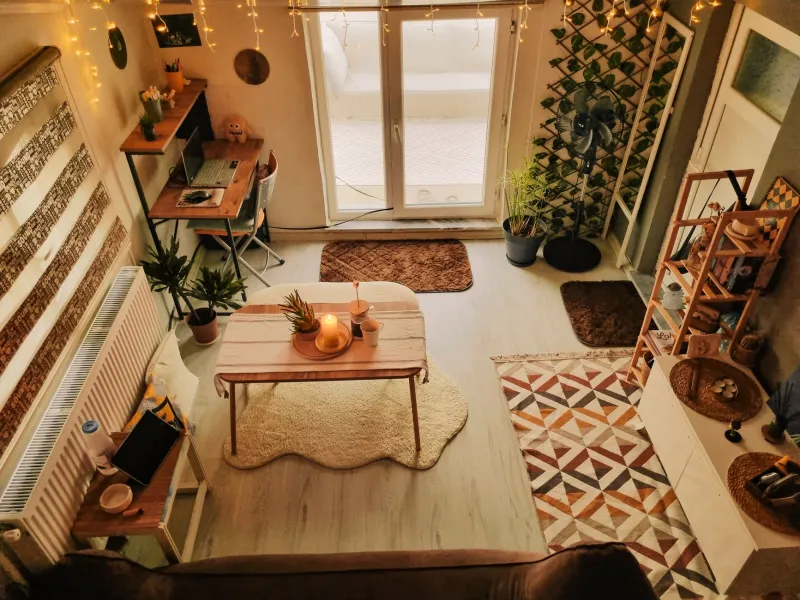
There's a shelf in my living room that I walked past for two years without really seeing. A stack of books I'd never opened, a candle from a brand I didn't even like, and a small ceramic dish that came with an apartment I lived in before this one. I kept it because — honestly? I never thought about it long enough to decide not to.
That shelf wasn't decorating my home. It was just filling space. And somewhere along the way, I started to wonder how much of my actual life was doing the same thing.
Your Home Doesn't Lie
We talk a lot about self-expression through fashion, through the people we surround ourselves with, through the things we post online. But the space you physically inhabit every single day? That one's operating on a level that's harder to fake.
Your home reflects your defaults. The things you've accumulated without intention. The furniture arrangement you've never questioned. The art on the wall that was there when you moved in and just... stayed. None of it is neutral. All of it is saying something about who you've been — which isn't always the same as who you're becoming.
There's real psychological weight to this. Research on environmental psychology consistently points to the fact that our physical surroundings influence our mood, our focus, and our sense of self. When your space feels chaotic, you feel scattered. When it feels like it belongs to someone else's life, you feel like a visitor in your own story. And when it genuinely reflects your values and your taste? Something settles. You feel, weirdly, more like yourself.
Minimalism as a Trend vs. Minimalism as a Practice
Here's where I want to be careful, because I think the conversation around home editing gets hijacked by aesthetics pretty fast. Minimalism became a whole personality type in the 2010s — all white walls, one perfect plant, a single linen throw. And look, if that genuinely resonates with you, great. But if you're clearing out your home because a Pinterest board told you to, you're just trading one set of defaults for another.
Real minimalism — the kind that actually shifts something — isn't about owning fewer things for the sake of it. It's about being intentional enough to ask: does this belong in my life? That question can lead you toward a maximalist space full of color and texture and collected objects that each mean something. Or it can lead you to four pieces of furniture and a lot of open air. The aesthetic outcome isn't the point. The intentionality is.
I have a friend who keeps a full gallery wall of family photos, vintage finds, and art she's made herself. Her home is layered and loud and completely, unmistakably her. That's curation too. That's editing with purpose. What it isn't is accumulation by accident.
The Edit Is the Work
When I finally pulled apart my living room — and I mean actually pulled it apart, moved furniture into the hallway, took everything off every surface — I didn't start by asking what I wanted to add. I started by asking what I actually wanted to keep.
That's a different question than it sounds like.
Keeping something means choosing it. It means saying: this object, this color, this arrangement — this is part of the story I'm telling about who I am and how I want to feel in my own home. It means taking responsibility for your environment instead of just inheriting it.
The ceramic dish? Gone. The unread books from a version of me who thought she was going to get really into philosophy? Most of them, donated. The art I'd hung because it was the right size for the wall rather than because I loved it? Replaced — slowly, over a few months — with pieces that actually made me stop and look.
What I noticed, almost immediately, was that I spent more time in my living room. Not doing anything different. Just... being there. Because it felt like mine.
Small Spaces, Big Signals
You don't have to gut your apartment to start this process. Sometimes the edit is small and the signal is still loud.
The corner of your bedroom that's become a dumping ground — what would it feel like to clear it and leave it intentionally empty? The kitchen counter covered in things you use once a year — what happens when you put them away and reclaim that surface? The closet stuffed with clothes that don't fit your life anymore, not just your body — what does it feel like to open it and actually see what's there?
These aren't rhetorical questions. They're literal invitations to notice how your space is making you feel and whether that feeling is one you're choosing.
Living Into Who You're Becoming
Here's the thing about intentional space design that nobody really talks about: it's aspirational in the best possible way. Not aspirational like a mood board you'll never actually live inside, but aspirational like a commitment. When you arrange your home around the person you're actively becoming — not the person you were five years ago, not the person you think you should be — you create an environment that supports that growth instead of quietly undermining it.
I moved my desk to face the window instead of the wall. Small thing. But now when I sit down to write, I'm looking out at something instead of in at nothing. That matters. It matters to how I feel about my work and, honestly, to how I feel about myself.
Your home is the most consistent environment in your life. It's the first thing you see in the morning and the last thing you see at night. It holds your routines, your rest, your creativity, your recovery. Treating it as a passive backdrop to your life is leaving a lot on the table.
So pull something off the shelf today. Hold it. Ask if it belongs. And if the answer is no — if it belongs to a version of you that you've already moved past — let it go.
The story you're living deserves a set that actually fits.