Let Yourself Be Bored: The Unexpected Place Where Your Best Ideas Are Hiding
The Moment I Realized I Was Afraid of My Own Mind
I was standing in line at a coffee shop — maybe a four-minute wait, tops — and I had already pulled out my phone before I'd even registered doing it. No notification. No reason. Just this automatic reach, like my hands had decided that four minutes of quiet was some kind of emergency.
That moment stuck with me more than I expected it to. Because I realized: I had trained myself to be afraid of unstructured time. And I don't think I'm alone in that.
We live in an era that has fully convinced us idle time is wasted time. There's always a podcast to queue up, a reel to watch, a to-do list to chip away at. Optimization culture — that whole hustle-adjacent, productivity-obsessed world we've collectively built — treats boredom like a bug in the system. Something to be fixed. But what if it's actually a feature?
What Your Brain Is Actually Doing When You're "Doing Nothing"
Here's the thing neuroscience has been quietly telling us for years: your brain doesn't go offline when you stop actively engaging it. It switches into what researchers call the default mode network — a kind of mental background processing mode that activates during daydreaming, mind-wandering, and yes, boredom.
This is the part of your brain responsible for making connections between ideas that don't obviously belong together. It's where creative leaps happen. It's where you suddenly solve the problem you'd been grinding on for days — not at your desk, but in the shower. Or on a walk. Or staring out a car window on a long highway stretch somewhere in the middle of Ohio.
When we constantly feed our brains stimulation — back-to-back content, constant noise, nonstop input — we essentially block that background processing from happening. We keep the conscious mind so busy that the deeper, more associative thinking never gets a turn.
Boredom, it turns out, is the brain's invitation to go somewhere interesting.
My Own Evidence: The Epiphanies I Almost Missed
Some of the ideas I'm most proud of — the ones that actually changed something in my life — didn't come from a brainstorming session or a carefully scheduled creative block. They came from nowhere. From the weird in-between moments that I used to try to eliminate.
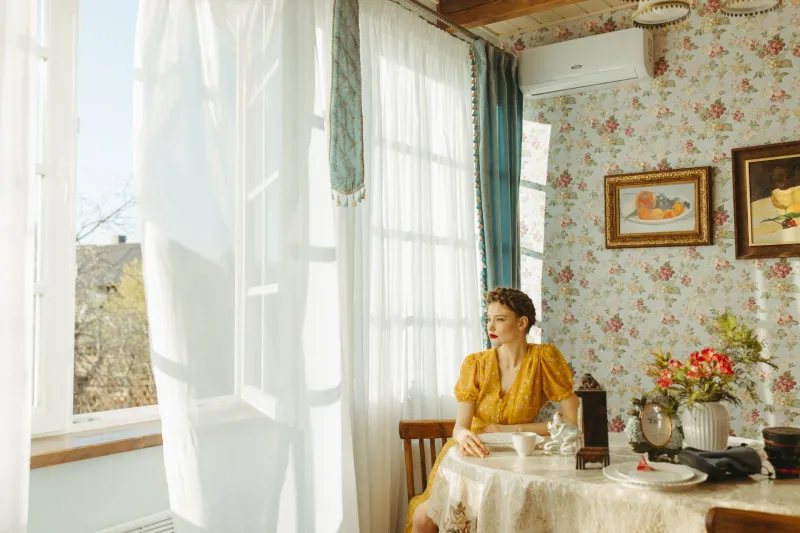
The direction I wanted to take this site? That came to me on a Sunday morning when I was doing absolutely nothing except watching light move across the floor of my apartment. I wasn't trying. I was just... there.
The conversation I'd been too scared to have with someone I care about? I finally figured out what I actually wanted to say during a solo road trip through upstate New York, no music, just miles.
I'm not saying boredom is magic. I'm saying it creates the conditions for something real to surface — something that gets drowned out when every minute is accounted for.
The Cultural Pressure to Stay Stimulated
What makes this hard isn't just habit. It's the social architecture around us. We live in a country that genuinely celebrates busyness. "How are you?" "Busy!" — said with a kind of exhausted pride, like being stretched thin is proof of a life well-lived.
And then there's the attention economy, which has spent billions of dollars engineering products specifically designed to colonize your idle moments. The scroll is frictionless on purpose. The autoplay is automatic on purpose. The notification is timed on purpose. Every moment you might have spent staring out the window has been turned into an opportunity to capture your eyeballs.
Protecting your boredom in this environment isn't passive. It's actually a radical act.
Practical Ways I've Started Defending the Empty Spaces
I'm not going to tell you to go on a digital detox for a month or throw your phone into a lake. That's not realistic, and honestly, it's not what I've done. What I have done is start treating unstructured time as something worth protecting — deliberately, consistently, without apology.
Leave the phone behind for small errands. Walking to the corner store, going to get coffee, taking a short walk — I try to do these without my phone whenever I can. Four minutes of waiting in line is enough time for something interesting to float up.
Bring back the long shower. I know, I know — water conservation is real. But a few extra minutes in the shower with no podcast, no planning, just hot water and wandering thoughts? That's become one of my most consistently productive creative spaces.
Don't fill transit time automatically. I live in a city and I take the subway regularly. I used to always have headphones in. Now I leave them out maybe half the time. People-watching, thinking, just existing in the city — it feeds something in me that constant content consumption doesn't.
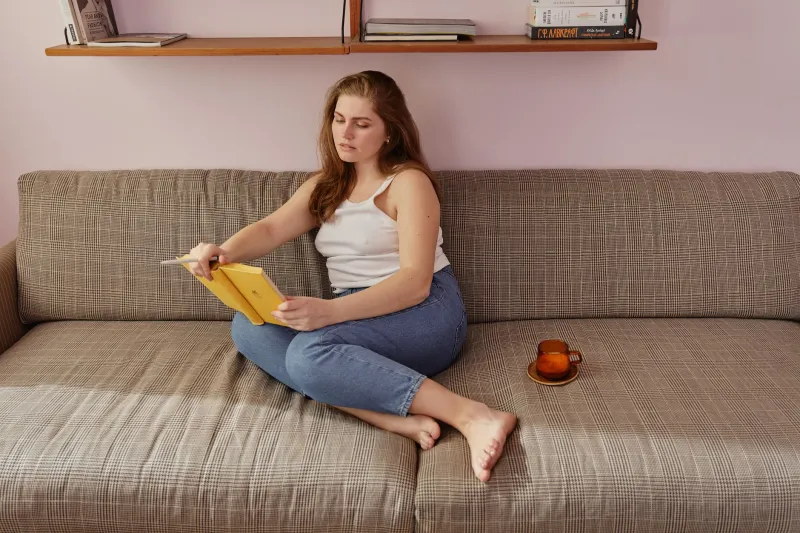
Protect one morning a week that has no agenda. This one is harder than it sounds. But I try to keep at least one weekend morning genuinely open — no plans, no list, no structured activity. Just whatever happens. It's become the time I look forward to most.
Sit with discomfort instead of reaching for your phone. This is the hardest one, honestly. The urge to fill silence is strong. But I've started treating that urge as a signal — something interesting might be trying to come through. I try to wait it out.
Boredom Isn't Laziness — It's Listening
I think we've conflated boredom with passivity, with wasted potential, with not trying hard enough. But there's a version of boredom that is actually deeply active — it's the mind doing its most sophisticated work, underneath the surface, making connections and surfacing truths you didn't know you were sitting on.
The most alive I feel creatively is never when I'm most stimulated. It's when I've given myself enough quiet that something real can finally be heard.
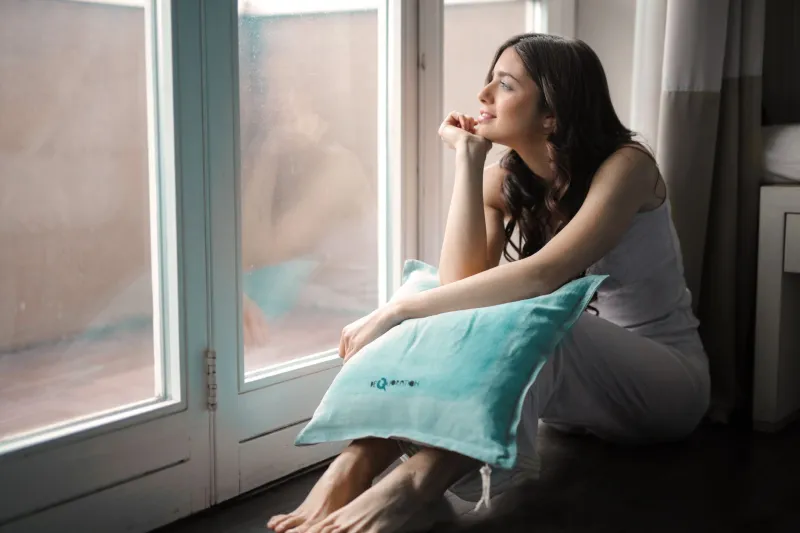
You don't have to optimize every moment. Some of the best moments don't look like much from the outside — just a person, sitting still, apparently doing nothing. Trust that something is happening anyway.