Why Some Rooms Restore You and Others Quietly Wear You Down
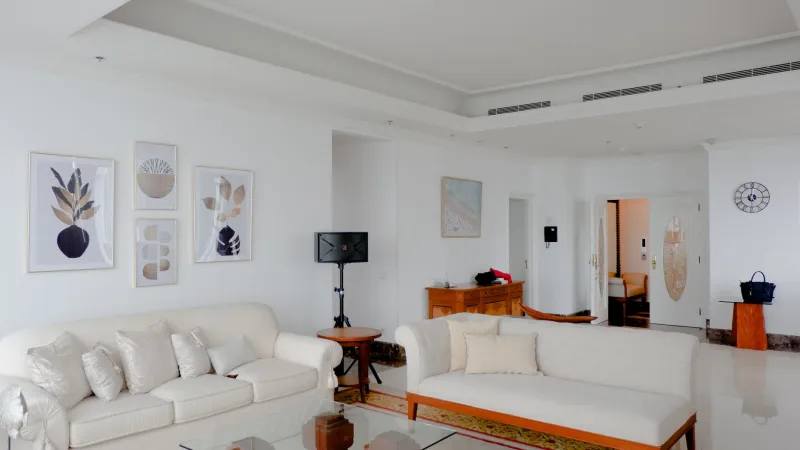
There's a couch in my living room that I kept for three years longer than I should have. It wasn't ugly, exactly. It was just… fine. Beige, a little stiff, the kind of piece that looks like it belongs in a furniture showroom or a waiting room — functional, inoffensive, completely devoid of personality. Every time I sat down on it, I felt vaguely uncomfortable in a way I couldn't name.
It took me embarrassingly long to figure out that the couch wasn't the problem. The problem was that I'd bought it because my mother suggested it. Because it was "practical." Because at twenty-six, I thought adulthood meant neutrals and sensible choices and not taking up too much visual space. That couch was never mine. It was a placeholder — a physical stand-in for a version of myself I thought I was supposed to inhabit.
When I finally replaced it with a deep green velvet sectional that felt like a hug and a creative decision simultaneously, something in my apartment shifted. Not just aesthetically — energetically. I actually wanted to be in that room.
The Psychology Behind Why Spaces Feel Off
Design psychologists have been studying this for decades, and what they keep landing on is something most of us already sense intuitively: our environments are in constant conversation with our nervous systems. The colors, textures, and objects surrounding us aren't passive backdrops. They're active inputs, constantly signaling something to our brains about safety, identity, and belonging.
When a space reflects our authentic values — our actual tastes, our real comfort levels, our genuine aesthetic sensibilities — it tends to lower cortisol and support a sense of calm and capability. When it doesn't? When it reflects obligation, other people's preferences, or an outdated version of ourselves? The space becomes a low-grade stressor. You don't always know why you feel tense the moment you walk in. You just do.
Environmental psychologist Sally Augustin has written about how misalignment between our spaces and our identities creates a kind of cognitive friction — a constant, subtle drain on our mental energy as our brains work to reconcile who we are with where we are. It's the interior design equivalent of wearing shoes that don't quite fit. You can do it. But you'll be tired by the end of the day.
The Rooms We Keep Out of Obligation
Most of us have at least one room — or one corner of a room — that exists for someone else. The formal dining room no one actually uses because your family always ate in the kitchen anyway. The guest bedroom outfitted for visitors who come once a year, while you're cramped in your own space every single day. The bookshelf arranged to look impressive rather than to hold the books you actually love.
These spaces are what I call obligation rooms. They're designed around an imagined audience rather than the actual inhabitant. And they tend to feel hollow in a way that's hard to articulate — like a stage set rather than a living, breathing environment.
I'm not saying you shouldn't have a guest room or a dining table. I'm saying: notice whether the space is serving your life or performing a version of it. There's a difference between a guest room that doubles as a reading nook you genuinely use, and a guest room that sits pristine and untouched while you eat dinner hunched over your coffee table because your dining space doesn't feel like yours.
Clutter Is a Symptom, Not the Problem
We've all consumed enough organizing content to know that clutter is bad, minimalism is good, and Marie Kondo changed the game. But I think the conversation often stops short of something more important: clutter is usually a symptom of unresolved identity, not just a storage problem.
The objects piling up in our spaces are often things we haven't made a decision about — not just physically, but emotionally. The stack of books we feel like we should read. The exercise equipment we bought during a version of ourselves we were trying on. The decorative items gifted by people we love, kept out of guilt rather than genuine affection.
Every object in your home is a tiny vote for a particular version of your life. When too many of those votes are cast by obligation, expectation, or inertia rather than genuine desire, the room starts to feel like it belongs to everyone but you.
Auditing a space isn't just about decluttering. It's about asking: does this object, this piece of furniture, this color on the wall — does it reflect something real about who I am right now? Not who I was five years ago. Not who I think I should be. Who I actually am, today.
What a Restorative Room Actually Feels Like
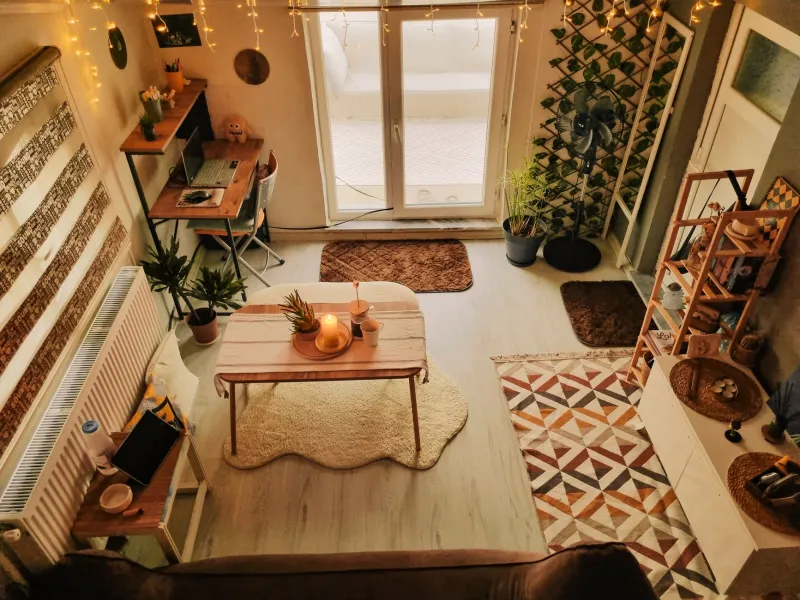
I want to be clear: a restorative space doesn't have to be a perfectly curated Instagram grid. It doesn't require a renovation budget or a decorator or a specific aesthetic. Some of the most alive, energizing spaces I've ever been in were chaotic by conventional standards — full of color and texture and collections that made no sense together except to the person who lived there.
What they had in common was intentionality. Every corner felt chosen. Even the imperfections felt deliberate — or at least, accepted rather than apologized for.
A restorative room is one where you exhale when you walk in. Where you feel seen by your surroundings rather than judged by them. Where the space seems to say: yes, this is you, and that's good.
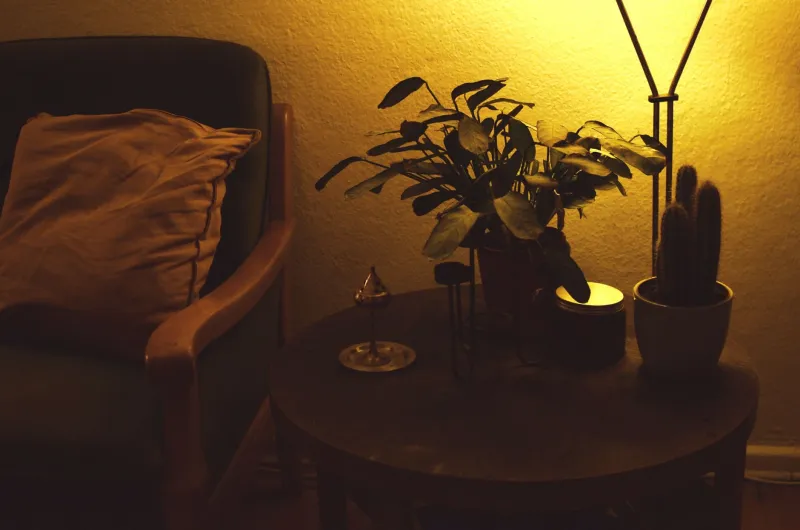
For me, that means warm light over bright white overhead fixtures. It means having my actual books on the shelf — the embarrassing ones, the dog-eared ones, the ones I've read six times — rather than the ones that look impressive. It means art that moves me over art that matches the couch.
A Simple Audit to Start
If you want to figure out which rooms in your home are restoring you and which are draining you, try this: walk through your space slowly, room by room, and notice where your body tightens and where it relaxes. Don't analyze it yet — just notice.
Then, for the rooms that feel tense or heavy, ask yourself three questions:
- Who chose this? Was it you, or was it someone else's preference, expectation, or a version of yourself you've since outgrown?
- Who is this for? Is this space serving your daily life, or is it performing for an imagined audience?
- What would I change if no one was watching? That last question is often the most revealing.
You don't have to overhaul everything at once. Start with one corner. Swap one thing. Bring in one object that feels genuinely like you. Small moves add up, and your nervous system will notice.
The Rooms That Keep You
The goal isn't a perfect home. It's a honest one. A space that holds the real version of your life — the messy, evolving, sometimes-contradictory person you actually are — rather than a curated performance of who you think you should be.
When your rooms reflect that honesty? They stop being spaces you maintain and become spaces that genuinely sustain you. They keep you, in the truest sense of the word — grounded, restored, and a little more yourself at the end of every day.
That green velvet couch? It keeps me. And I can feel the difference every single time I come home.